
Getting started
Buying a used e-scooter for delivery: battery health, warranty and registration checks
A second-hand electric scooter can cut your running cost, but the battery is the big unknown and some 'low-speed' scooters aren't what they claim. What to check before you pay: registration, battery and charger, warranty papers and swap compatibility.
By Editorial team Published
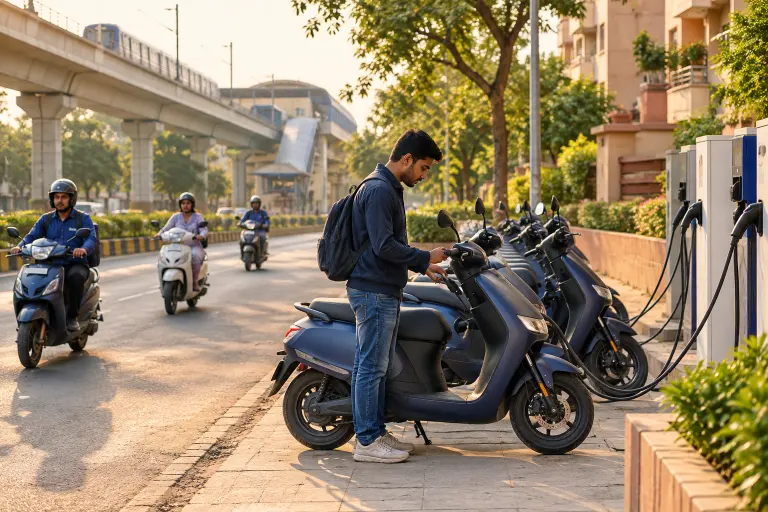
With a used e-scooter, the battery is what you are really buying, and the papers tell you which rules apply. First find out whether it is a registered scooter (with an RC, licence and insurance rules like any bike) or a verified low-speed model (no registration). Then check the battery and charger, ask for the warranty papers, and make sure it fits the charging or battery swapping you will actually use. If the numbers don't add up, renting an EV for a few weeks is a lower-risk way to start.
Registered or low-speed? Check this first
The Central Motor Vehicles Rules let a two-wheel battery vehicle count as not a motor vehicle only when an approved testing agency has confirmed a top speed below 25 km/h, a low-powered motor, and brakes and reflectors (Central Motor Vehicles Rules, rule 2(u), checked 22 October 2026). Everything else is a motor vehicle and needs registration, insurance and a driving licence.
The transport ministry has warned states that some dealers sell faster e-scooters as low-speed models without approvals or insurance (Autocar Professional, 15 October 2022, read 23 October 2026). So:
- If the seller says "low-speed, no RC needed": ask for the testing agency's approval paper. If the scooter clearly goes faster than 25 km/h, treat it as a motor vehicle and don't ride it for deliveries without the papers.
- If it has an RC: everything in our used-bike checklist applies: owner's name, chassis number, loan entry, challans, insurance, and an RC transfer within Delhi's 14-day window (Transport Department, Delhi, checked 22 October 2026).
The low-speed rule may change: the ministry published draft amendment rules on 21 August 2026 (TeamLease RegTech summary, read 23 October 2026). Our post on the low-speed e-scooter rule change tracks where it stands.
The battery and charger
There is no single test you can do at the roadside, so collect as much evidence as you can:
- Service records. Ask for the scooter's service history and any battery check done at an authorised service centre.
- A long test ride. Start from a full charge and ride a route like your delivery day, with stops. Watch how fast the charge level drops and whether power fades on a flyover.
- The original charger. Ask for it and check that it is the one meant for this model.
- Signs of damage. Look for cracks, swelling, water marks or loose fittings around the battery box. Ask whether the scooter has been through a flooded road.
- Manufacturing date. Check the invoice. Stricter battery safety requirements for electric two-wheelers (the AIS-156 amendments, covering battery cells, the on-board charger, battery pack design and fire risk from internal short circuits) came in two phases, from 1 December 2022 and 31 March 2023 (The Tribune, 28 September 2022, read 22 October 2026). A scooter made before then was built before those rules.
Warranty papers
Battery and vehicle warranties come from the maker's own terms, and those terms differ from brand to brand. Before you pay, ask the seller for:
- the original purchase invoice and warranty card or booklet;
- any extended battery warranty they bought, with its terms;
- the service record, in case the maker asks for it with a claim.
Then call the maker's service centre with the chassis number and ask two things: how much warranty is left, and whether it moves to a second owner. Get the answer in writing (SMS or email) if you can.
Charging or swapping: will it fit your day?
- Swapping works only with scooters built for swappable batteries, so a fixed-battery scooter can't use a swap station. Ask the seller which swap network, if any, the model works with. Our battery swapping post explains the networks around NCR.
- Charging at home needs a safe socket and time. Plan how many hours a night you can charge before you buy.
A Delhi subsidy rule to know
Under the Delhi EV Policy 2026, a vehicle that got the Delhi purchase subsidy can't be moved to another state's registration for three years from the policy's notification (Delhi Gazette, 30 June 2026, read 8 October 2026). If you live in Noida, Gurugram or Ghaziabad and plan to re-register a Delhi scooter there, ask the seller whether it got the subsidy. More on the policy: Delhi EV Policy 2026 for delivery riders.
Renting first
You don't have to buy to try electric. Our EV rental guide covers what renting an e-scooter for deliveries involves, including battery swaps, maintenance and the questions to ask. A few weeks on a rented scooter also shows how many kilometres you really ride in a day, which tells you how much battery you need when you do buy.