Pay and earnings
Why TDS is cut from your delivery payouts: the sections and rates as the law states them
The 1% cut from delivery payouts is tax deducted at source. Which section of the law it comes from, before and after the new Income-tax Act of April 2026, why it is often more than you owe, and what a higher rate means.
By Editorial team Published
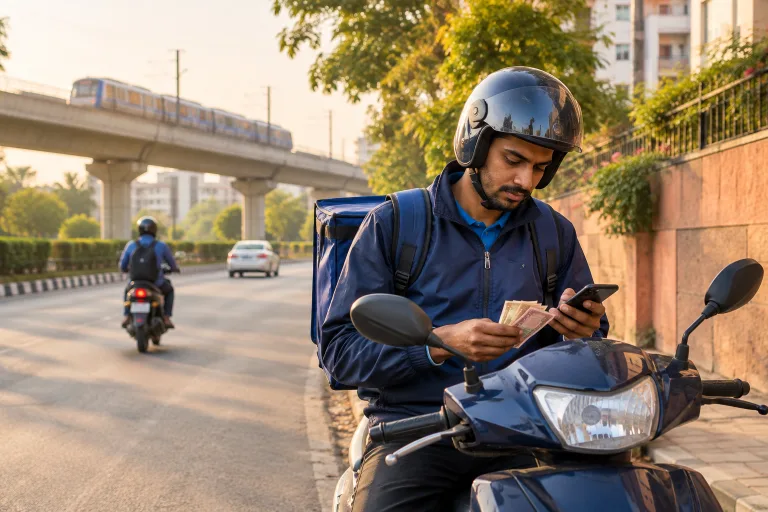
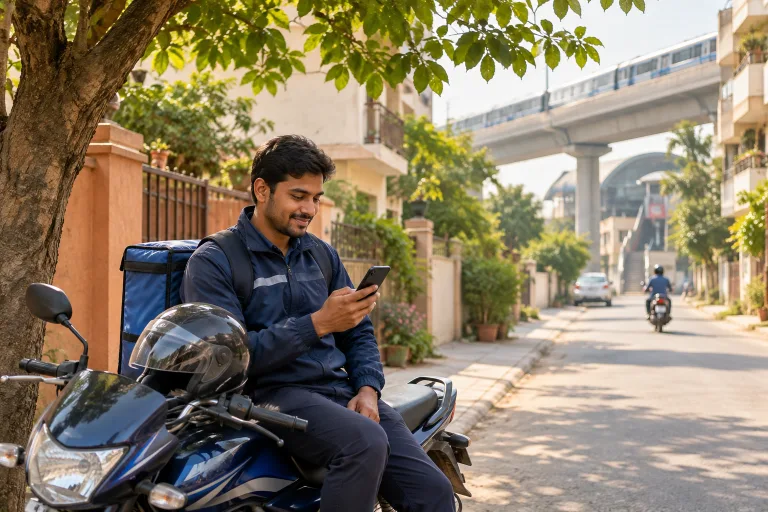
The small amount missing from each delivery payout is usually TDS, tax deducted at source. The company that pays you keeps it back and deposits it with the government against your PAN. On Zomato and Blinkit payouts the cut is 1%, according to their parent company, Eternal (IBTimes, 17 September 2026).
It is not a fee and not a fine. It is your tax, paid early. Whatever turns out to be more than your real tax for the year can be claimed back. Here is where the cut comes from in the law, as the Income Tax Department and the government state it.
The sections, old and new
| Money earned | Law | Section for payments to contractors | Rate for an individual |
|---|---|---|---|
| Up to 31 March 2026 | Income-tax Act, 1961 | 194C | 1% |
| From 1 April 2026 | Income-tax Act, 2025 | 393(1) | Same as before |
Sources: the 1% rate for an individual contractor (2% for others) is in the government's TDS rate table (PIB, May 2020). The new Act came into force on 1 April 2026 (PIB, 12 May 2026). The Income Tax Department's FAQ uses section 194C as its own example of a provision that moved to section 393(1), and says the TDS rates and money limits for every kind of payment were kept as they were (e-filing TDS FAQ, as of October 2026).
The same two rates came up in the February 2026 Budget: it proposed bringing supply of manpower services under the contractor rules, with TDS on them "at the rate of either 1 percent or 2 percent only" (PIB Budget summary, February 2026).
Which section does your app use?
News reports give the rate, not the section. Eternal named 1%, which is the contractor rate for an individual in the table above. For other apps, the reports we found don't name the rate or the section. Your own statement is the place to look: every TDS entry against your PAN shows up in Form 26AS and the Annual Information Statement. How to open them is in see the TDS on your payouts in Form 26AS and AIS.
Why 1% is often more than you owe
TDS comes off payouts as they are made, long before anyone knows your total for the year. Your actual tax is worked out only at the end of the year, on your whole income. In the new regime, the rebate for a resident individual is up to ₹60,000 where taxable income stays within ₹12,00,000, and that can bring the tax to nil (Income Tax Department, AY 2026-27 page, as of October 2026). The rebate rules are in Section 87A rebate and the new regime.
So the TDS cut does not show what you finally owe. If too much was cut, the refund only comes once an income tax return is filed and the department has processed it (Outlook Money, 18 September 2026).
When the rate goes up: a PAN that doesn't work
If your PAN is inoperative because it was never linked to Aadhaar, tax is deducted at the higher rate set in section 206AA of the old Act. On top of that, no refund is paid to you and no interest on it (e-filing Link Aadhaar page, as of October 2026). That is the one case where you lose money on every payout and can't get it back until you fix the PAN. How to check and fix it: PAN-Aadhaar link and higher TDS.
Can TDS be cut less, or not at all?
The law has a lower or nil deduction certificate for people whose tax will be low. Until now that meant an application to a tax officer. The February 2026 Budget proposed a rule-based, automated process so that small taxpayers can get the certificate without that application (PIB Budget summary, February 2026). That was a Budget proposal. For most riders, filing the return each year is the simple way to get the extra back.
TDS is cut from pay, never paid in advance
Because TDS comes out of money you are paid, nobody can ask you to pay "TDS" before you start work. That word has been used in scams. In June 2025, Delhi Police in Shahdara described a fake placement agency that promised a job with a grocery delivery company, then collected over ₹9,000 from a jobseeker between 27 May and 6 June 2025 as fees for registration, document checks, an agreement, "TDS" and processing (The Week, 24 June 2025). More warning signs are in our fake job scams guide.
What to do this year
- Keep your PAN working. Check its Aadhaar link status on the e-filing portal.
- Keep your payout records. Screenshots or statements of each payout help you match what was paid and what was cut.
- Check the TDS in Form 26AS or AIS before you file.
- File the return for the year, then e-verify it so the refund can start.
The full year, with dates and refund steps, is in our pillar guide: income tax for delivery partners in 2026. For what a payout is made of before tax, see our pay and incentives guide.
Want more delivery work?
Riding in Delhi NCR and looking for your next job? Apply for a delivery job.