Pay and earnings
Section 87A rebate and the new regime: when delivery income ends up tax-free
Under the new tax regime, a resident with taxable income up to ₹12,00,000 gets a rebate of up to ₹60,000, which can wipe out the tax. The limits for 2025-26 and for the new tax year 2026-27, what counts as taxable income for delivery pay, and why you still have to file.
By Editorial team Published
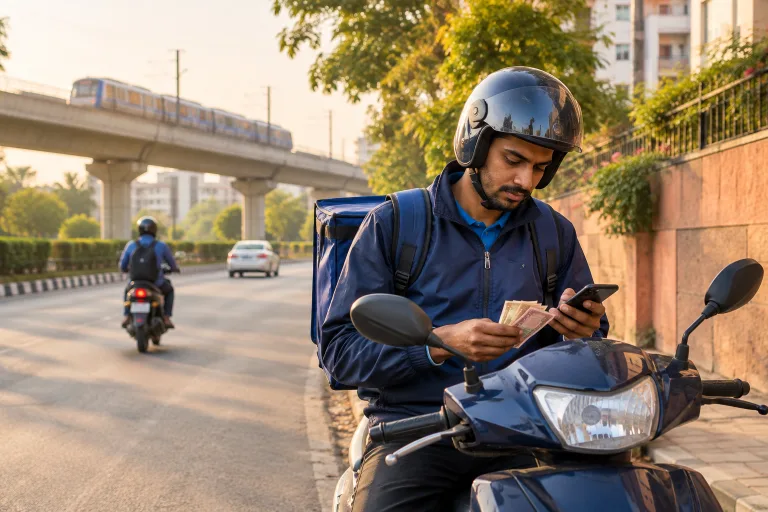
Under the new tax regime, a resident individual whose taxable income for the year is up to ₹12,00,000 gets a rebate of up to ₹60,000 on the tax. That rebate covers the whole tax on income up to that limit, so the tax payable comes to nil (Income Tax Department, AY 2026-27 page, as of October 2026). For many delivery partners this is the reason the TDS cut from payouts comes back in full once they file.
The rebate does not stop TDS being cut. It only matters when you file your return.
The limits, year by year
| Year of income | Law and section | New regime | Old regime |
|---|---|---|---|
| April 2025 to March 2026 (AY 2026-27) | 1961 Act, section 87A | Up to ₹60,000, taxable income up to ₹12,00,000 | Up to ₹12,500, taxable income up to ₹5,00,000 |
| April 2026 to March 2027 (tax year 2026-27) | 2025 Act, section 156 | Up to ₹60,000, nil tax up to ₹12 lakh total income | Up to ₹12,500, nil tax up to ₹5 lakh |
Sources: the 2025-26 row is from the Income Tax Department's AY 2026-27 page. The 2026-27 row is from a February 2026 report that the Budget left slab rates unchanged under both regimes and that the rebate now sits in section 156 of the new Act, matching section 87A of the old one (Outlook Money, 4 February 2026).
The new regime slabs up to the rebate limit
For individuals below 60, the department lists these new regime rates (AY 2026-27 page):
| Taxable income | Rate |
|---|---|
| Up to ₹4,00,000 | Nil |
| ₹4,00,001 to ₹8,00,000 | 5% |
| ₹8,00,001 to ₹12,00,000 | 10% |
The rebate, as the page states it, is for taxable income up to ₹12,00,000; higher slabs follow above that. The new regime is the default for individuals; you have to opt out of it to use the old one (e-filing FAQ on the new Act, as of October 2026).
Taxable income is not the same as your payouts
The limit is about taxable income, not the total money that reached your bank. If your delivery income is treated as business income under the presumptive scheme of section 44AD, the income you declare is a share of your receipts: at least 6% of what came in through bank or electronic modes, and at least 8% of the rest (ITR-4 validation rules, AY 2026-27). Which form and method fit your year is in which ITR form for a delivery partner.
Other income counts too: interest on savings, or a salary from a job you held for part of the year. The rebate looks at your total.
Who gets the rebate
- Residents only. The department's page speaks of resident individuals.
- It works on the tax, not on TDS. The 1% cut from payouts is still taken through the year. What was cut beyond your final tax comes back only after you file a return and it is processed (Outlook Money, 18 September 2026).
- Old regime only by choice, and on time. With business income, the old regime needs Form 10-IEA by the return's due date (e-filing page for business income). A belated return can't switch to it (Outlook Money, 2 September 2026).
Why riders still file when they owe nothing
No tax payable does not mean no return. The return is what turns the TDS already cut into a refund, and it leaves you with a record of your yearly income. For 2025-26, Zomato and Blinkit partners who filed got back around ₹1,600 each on average (IBTimes, 17 September 2026).
If you missed the 2026 due date, a belated return is still open until 31 December 2026 (e-filing ITR FAQ, as of October 2026). Our pillar guide, income tax for delivery partners in 2026, walks through the PAN check, the dates and the refund steps. How delivery pay is built up, from per-order pay to incentives, is in our pay and incentives guide.
Your next delivery job
Start here: Apply for a delivery job