Rules and law
No paid leave as a delivery partner: what the law says and how riders plan breaks
Paid leave in Indian law is for employees, so a partner ID earns none: a day logged out is a day without payouts. What the law gives employees, what some apps add, why breaks can affect scheme eligibility, and how to plan time off (October 2026).
By Editorial team Published
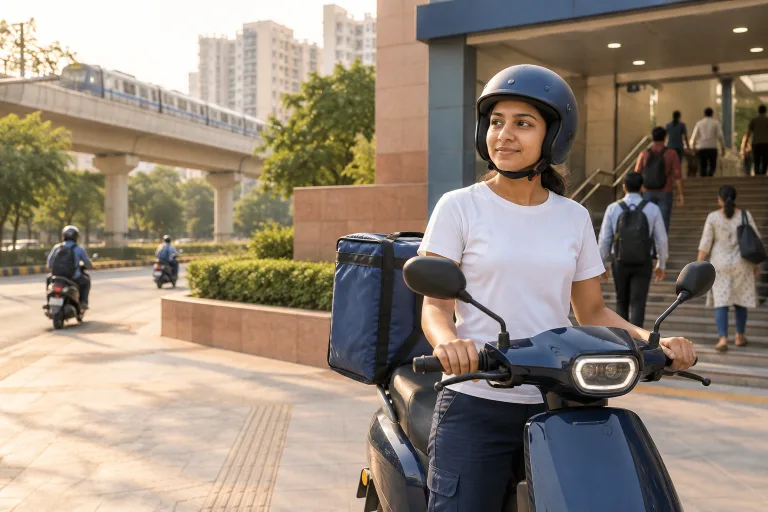
On a partner ID there is no paid leave. Indian law gives paid annual leave to workers employed in an establishment, and an app partner is not employed: when you log out for a day, sick or at a family function, that day earns nothing. Some apps cover part of the gap on their own, and the 2026 rules count your working days for welfare schemes, so a long break has a second cost. Here is what the law says as of October 2026, and how to plan time off.
What employees get
The Occupational Safety, Health and Working Conditions Code gives every worker employed in an establishment paid leave if they work 180 days or more in a calendar year (OSH Code, 2020, section 32, PRS copy):
- one day of paid leave for every 20 days worked;
- unused leave carries forward, up to 30 days;
- the worker can ask for leave to be paid out (encashed) at the end of the year;
- someone who quits or is dismissed gets wages for leave earned.
Some delivery firms do put riders on a payroll with leave. In February 2025 People Matters reported that Delhivery had moved 7,700 riders from partner rolls to its payroll, with paid leave among the benefits (People Matters, 21 February 2025).
Why a partner gets none
The leave rule is for people employed on wages. App partners are, in law, gig or platform workers who earn "outside of traditional employer-employee relationship" (Code on Social Security, 2020, section 2, PRS copy). App terms add that the partner gets no salary, chooses their own login time, and is paid per order (AajTak, 21 September 2026). Freedom to log out is the flip side of no pay for days off.
Fairwork India, which rates apps on working conditions, says platform workers usually don't qualify for protections such as sick pay "because of their independent contractor status" (Fairwork India Ratings 2024, October 2024).
What some apps add on their own
Fairwork asks platforms to compensate workers for income lost when they can't work, and to make sure a worker's standing isn't hurt after a long absence. In its 2024 ratings, five of 11 platforms (bigbasket, Swiggy, Urban Company, Zepto and Zomato) were credited with free accident insurance, compensation for income lost to illness other than accidents, and protecting a worker's standing when they return from a break taken with prior notice to the platform (Fairwork, linked above). That is company policy, not a legal right. Ask your app what it offers today.
A break can cost scheme days too
Under the Social Security (Central) Rules, 2026, to qualify for schemes for gig and platform workers you need at least 90 days with one aggregator, or 120 days across several, in the last financial year. A day counts only if you earned some income from that aggregator on that calendar day (Social Security (Central) Rules, 2026, rule 48(2)(e)). So a long break doesn't only cost payouts; it also lowers your count of working days. How to register and what the schemes cover: gig workers' social security and e-Shram.
How lost days add up: one Delhi study
In May and June 2025, researchers followed 276 delivery workers in Delhi and Gurugram through the heat season. Riders who got only heat warnings worked 0.8 fewer days in heatwave weeks. Riders who also got ₹200 in cash for each heatwave cut their workdays by only 0.28 (Ideas for India, 25 February 2026). Even a little money for the days off changed how many days people felt they could lose.
How to plan a break without paid leave
- Tell the app or your hub before a long break, and keep the reply. On the platforms Fairwork credited, standing was protected for breaks taken with prior notice.
- Keep a slow-week pot. Put a little of every weekly payout aside for days you can't ride. A simple method: budgeting on weekly payouts.
- Pick your days with the calendar open. See which festival and sale days are coming before you choose your days off: festive calendar for Delhi riders.
- Watch your day count. If you are close to 90 days with one app (or 120 across apps) for the year, a long break near the end of March can push you below it.
- Sort health cover before you need it. Register on e-Shram and check which schemes you can join.
- If paid leave matters most, look at payroll jobs. How to tell a salaried offer from a partner ID: salaried delivery job or gig partner ID.
The full comparison of what employees and partners get, from minimum wage to bonus: are delivery partners employees?
Looking for delivery work in Delhi NCR?
Fill in your name, phone, city and area.