On the job
Keeping the food bag clean: FSSAI hygiene guidance for delivery
FSSAI has told food delivery platforms to train last-mile riders in hygiene, keep food apart from non-food items and put every food handler through its FoSTaC training. What the guidance says, and a simple bag routine that follows it.
By Editorial team Published
FSSAI's hygiene rules for online food are written for the platforms, but they end up in your delivery bag. In December 2024, India's food regulator asked online food businesses to make training their last-mile riders a priority, covering food safety and hygiene, and to keep food and non-food items in separate deliveries. In July 2025 it went further: every food handler in the chain, e-commerce staff included, has to go through FSSAI's FoSTaC hygiene training. Here is what each step says, and a bag routine that matches it.
The December 2024 advisory
On 3 December 2024, FSSAI's Regulatory Compliance Division issued an "Advisory for E-commerce Food Business Operators (FBOs) on Strengthening Food Safety Compliance" (FSSAI advisory, 3 December 2024). The part about delivery riders, point 2, says:
- Training the last-mile delivery personnel is "one of the critical needs" for e-commerce food businesses.
- Delivery staff should be well trained in food safety and hygiene.
- The training should cover safe handling and transport of food to prevent contamination, personal hygiene, and proper sanitisation.
- Food and non-food items must be delivered separately, to avoid cross-contamination.
The rest of the advisory is about the platform's own listings: labels, shelf life and showing sellers' FSSAI licence numbers.
July 2025: training for every food handler
On 8 July 2025, FSSAI's CEO met more than 70 representatives of e-commerce platforms in New Delhi. FSSAI said all food handlers involved in the process, e-commerce personnel included, must undergo compulsory FoSTaC (Food Safety Training and Certification) training in hygiene protocols, and that platforms must share their training plans and timelines with FSSAI. It added that every entity in the supply chain, "from manufacturing to home delivery", is liable for compliance (FSSAI press release, 8 July 2025).
What FoSTaC is
FoSTaC is FSSAI's own training and certification programme. Its basic-level courses name "last mile delivery persons" in their scope, alongside small transporters and logistics staff, and there is a basic course manual on storage and transport (FoSTaC basic courses, checked 30 October 2026). So if a platform asks you to do a food safety course, ask whether it is FoSTaC: that is the training FSSAI's July 2025 directive names.
A bag routine that follows the guidance
None of this needs special products. It is the advisory's three points (handling, hygiene, separation) turned into habits:
Before the shift
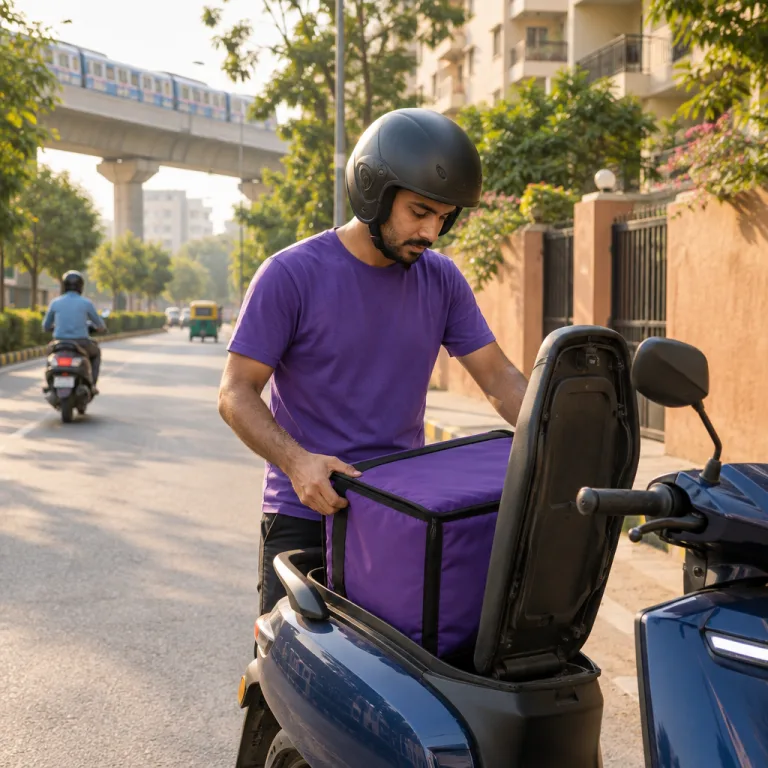
- Open the bag fully and wipe the inside, base and corners. Let it dry before you load anything.
- Check the lining and zips. A torn lining traps spills you can't clean.
At pickup
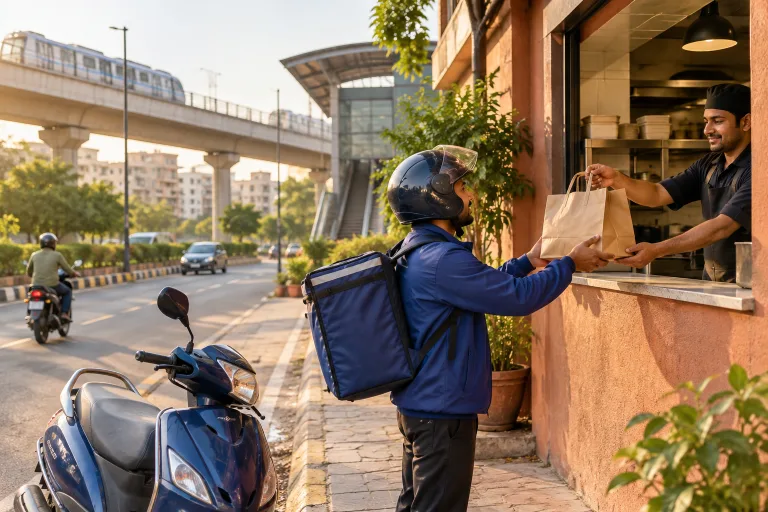
- Clean your hands before you take the order from the counter.
- Keep sealed food upright and flat at the bottom; nothing heavy on top of it.
- Keep food apart from everything else. If you also carry groceries, medicines or parcels on the same shift, or work for a second app, they don't share a compartment with a food order. That is FSSAI's separate-delivery point in practice.
On the road
- Keep the bag closed between pickup and drop. Dust and smoke on Delhi roads get in otherwise.
- Never put the bag down on a drain cover, a washroom floor or the road.
After a spill
- Clean it at the next stop, not at the end of the day. A smell that stays in the lining reaches the next customer.
End of the shift
- Empty the bag completely, wipe it again and leave it open indoors to air out.
- Wash the T-shirt as its label says; a clean uniform is part of "personal hygiene" too.
If the bag is beyond cleaning
A bag with a torn lining or broken insulation can't be kept hygienic. Ask your hub about a replacement. Kit costs can be recovered from payouts, so ask what it will cost first: lost or damaged kit and replacement charges. Who pays for the bag in the first place: delivery bag, T-shirt, helmet and carrier costs.
How food delivery work runs in Delhi NCR, from pay to who it suits: our food delivery work guide. Carrying sweets in the festive season has its own FSSAI rules: Diwali sweets and the best-before date.
Food delivery work
Think food delivery suits you? Start here: Apply for a delivery job.