Safety
Delhi smog season: protecting your lungs and eyes on long rides
In winter, Delhi's air often turns 'poor' or worse. How to read the AQI, which masks the Health Ministry says help, what to do for your eyes, when to stop and see a doctor, and what GRAP stages mean for riders.
By Editorial team Published
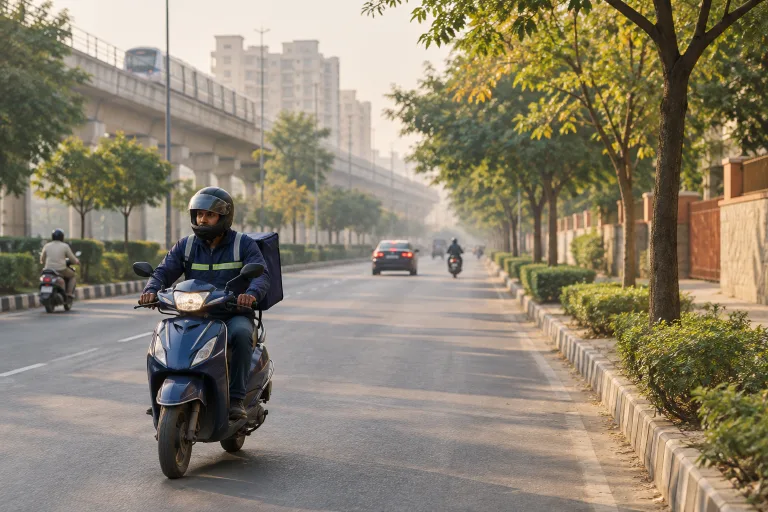
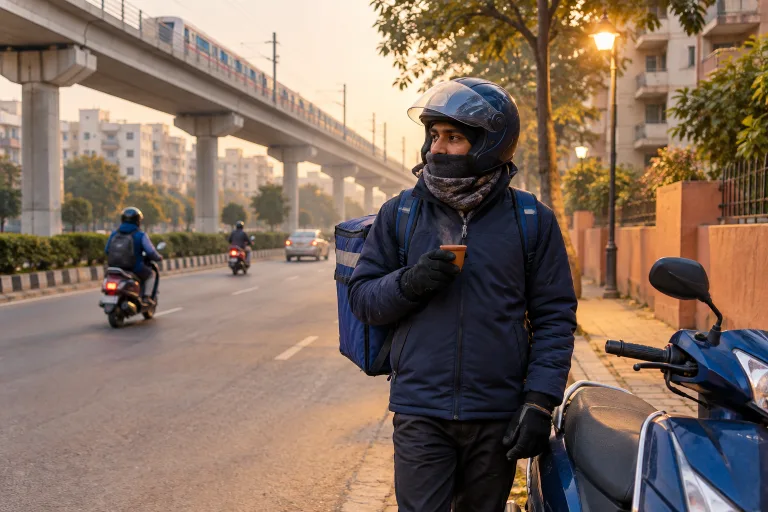
Riders spend the whole day on the road, often in slow traffic, where the air is worst. The Health Ministry counts people who work outdoors for long hours, such as traffic police, auto drivers and roadside vendors, among those at higher risk from air pollution (MoHFW Health Advisory on Air Pollution, sent to states on 1 November 2025). Delivery riders do the same kind of all-day outdoor work. The health advice in this post (masks, diet, eyes, warning signs) comes from that advisory.
Bad air comes early. Last year Delhi's air turned 'very poor' just before Diwali, and GRAP Stage II started on 19 October 2025 (Business Today, 19 October 2025).
Check the AQI before your shift
The air quality index (AQI) runs from 0 to 500. Higher is worse. The official AQI comes from the Central Pollution Control Board (CPCB). Its Sameer app shows the hourly AQI for your city. The bands that matter in winter:
| AQI | Category | What it can do to your health |
|---|---|---|
| 201–300 | Poor | Breathing discomfort after long exposure |
| 301–400 | Very poor | Breathing illness after long exposure |
| 401–500 | Severe | Breathing illness after long exposure; children, older people and the sick can get seriously ill even after a short time |
A rider is out for hours, so "long exposure" means you. On 'poor' days (above 200), the advisory says to avoid hard physical effort outdoors, and to stay away from roads with slow, heavy traffic where you can.
Masks: which ones help
- On days when the AQI is above 200, the advisory says to consider a close-fitting N95 or N99 mask.
- It must fit well over your mouth and nose. Replace it as the instructions on the pack say.
- Paper masks, handkerchiefs, scarves and cloth masks don't work against polluted air.
One honest point: the advisory says these masks help when exposure is short. A whole shift is not short. So a mask helps, but it doesn't replace breaks away from the road.
Plan your day around the worst air
- Take your breaks off the main road: inside the store, the hub or a restaurant, not at the roadside.
- The advisory warns against outdoor exercise in the morning and late evening on bad-air days. If you can choose your hours, keep that in mind.
- Drink enough water and eat fruit and vegetables. The advisory calls this a "no-regret" step.
- Don't smoke. Smoking makes the effects of polluted air worse.
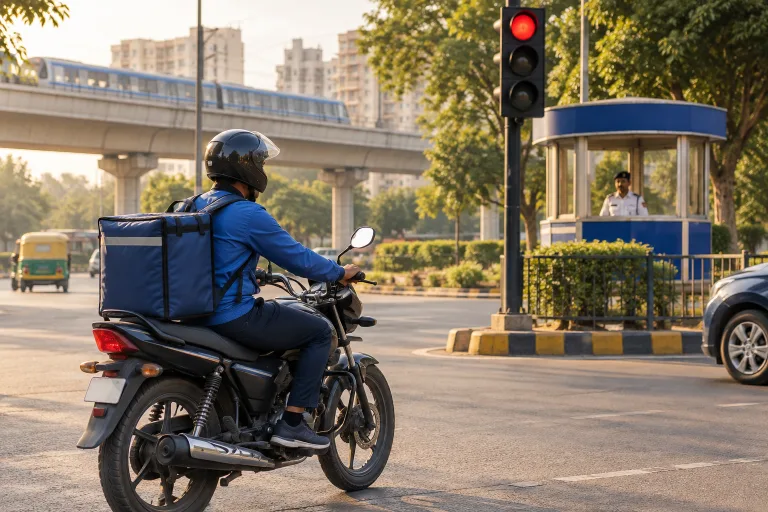
- Turn off your engine at red lights. This is on the GRAP list of things every citizen can do (CAQM GRAP schedule, 29 September 2026).
Look after your eyes
- Keep your helmet visor down while riding.
- Wash your eyes with running water regularly, and gargle with warm water. Both are in the advisory.
- Red or watery eyes are one of the signs the advisory says need a doctor (see below).
When to stop and see a doctor
See the nearest doctor if you have:
- breathlessness
- cough, wheezing or a tight chest
- chest discomfort or pain
- giddiness
- red or watery eyes
If you get a cough, wheezing or a tight chest while working, the advisory says to slow down or stop and see a doctor. If you have asthma or a heart or lung problem, keep your medicines with you on the bike. In an emergency, call 112 (Delhi Police: ERSS 112, 24x7, toll free).
Riding while dizzy or short of breath also puts you at risk on the road. Our summer heat safety guide has the same rule: stop first, don't finish "one more order".
GRAP in one paragraph
GRAP (Graded Response Action Plan) is the set of anti-pollution steps the Commission for Air Quality Management (CAQM) turns on as Delhi's air gets worse. Its schedule, last revised on 29 September 2026, has four stages: Stage I 'Poor' (AQI 201–300), Stage II 'Very poor' (301–400), Stage III 'Severe' (401–450) and Stage IV 'Severe+' (above 450). A stage can start before the AQI gets there, based on the weather forecast, and each stage adds to the ones below it (CAQM GRAP schedule).
What riders should know: from Stage I, transport officials and traffic police are told to check pollution certificates (PUC) strictly and to impound or fine visibly polluting vehicles. Stage III limits older BS-III petrol and BS-IV diesel cars, not bikes. At Stage IV, state governments may close non-emergency businesses or bring in odd-even rules, which could affect deliveries. And separately from GRAP, since 1 October 2026 fuel stations in Delhi NCR are to refuse fuel (petrol, diesel or CNG) to vehicles without a valid PUC (CAQM Direction No. 101; Business Today, 30 September 2026). To see which stage is on today, CAQM says to check its website and the Sameer app.
Questions riders ask
Which mask is best for Delhi pollution? A close-fitting N95 or N99 mask, according to the Health Ministry. Cloth masks, paper masks, scarves and handkerchiefs don't protect you from polluted air.
Is it safe to ride when the AQI is above 300? At 'very poor' (301–400), long exposure can cause breathing illness even in healthy people. If you ride, wear an N95, take breaks indoors, avoid sitting in slow traffic where you can, and stop if you feel breathless or dizzy.
Does GRAP stop bike deliveries? No GRAP stage bans two-wheelers as such (schedule of 29 September 2026). Your bike needs a valid PUC, and at Stage IV states may close non-emergency businesses or bring in odd-even rules.
How do I check the AQI in my area? Use CPCB's Sameer app. It shows the hourly AQI for your city.
Looking for delivery work in Delhi NCR?
Fill in one short form with your name, phone, city and area. Our team calls you back about delivery openings near you.